Breast Reduction for Back Pain: Can It Improve Posture and Daily Life?
In 2013, A research team from the University of Pavia in Italy studied women who underwent breast reduction surgery for heavy breasts. The study included 17 women and assessed them before surgery and 2 months after surgery. The researchers wanted to know whether breast reduction could improve back pain, balance, posture, and daily activities.
Can Heavy Breasts Cause Back Pain?
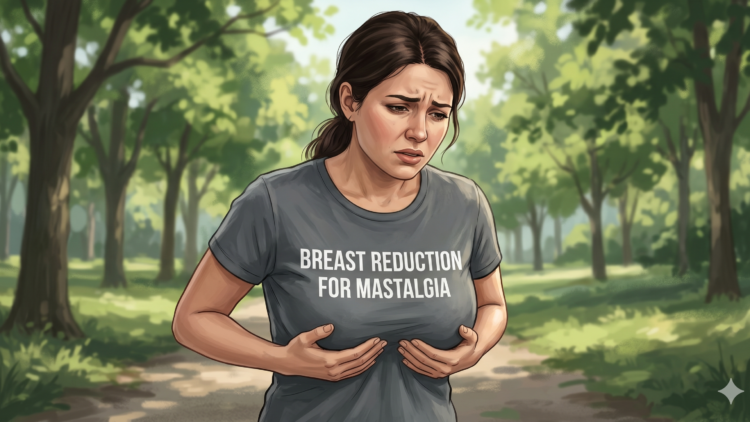
Yes, heavy breasts can cause back pain in many women.
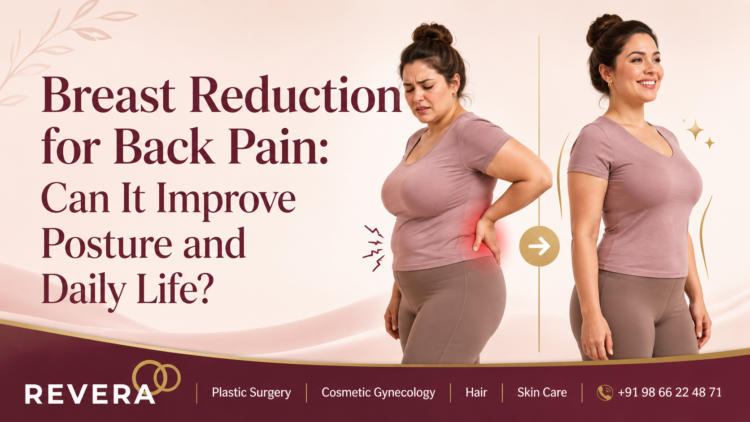
When the breasts are very large or heavy, they pull the upper body forward. As a result, the neck, shoulders, upper back, and lower back have to work harder to maintain posture.
Over time, this can lead to:
- Neck pain
- Shoulder pain
- Upper back pain
- Lower back pain
- Bra strap marks
- Forward bending posture
- Difficulty standing for long periods
- Difficulty exercising
- Skin irritation under the breasts
- Tiredness during daily activities
In many women, heavy breasts do not cause only cosmetic concern. They can also create a real functional problem.
Why Do Heavy Breasts Affect Posture?
Heavy breasts shift body weight forward.
Because of this, the muscles of the back and neck work harder to balance the body. The shoulders may roll forward. The upper back may curve more. The lower back may also compensate.
This chain of changes can create pain from the lower back to the neck. In some women, the pain may also spread toward the shoulders.
Therefore, breast heaviness can affect the whole posture, not just the chest area.
What Is Breast Reduction Surgery?
Breast reduction surgery, also called reduction mammaplasty, removes extra breast tissue, fat, and skin.
However, the goal is not only to reduce size. The surgeon also reshapes the breast, lifts the nipple to a better position, and improves breast proportion.
For many patients, the main goal is comfort. They want relief from pain, heaviness, sweating, rashes, and difficulty with daily activities.
What Did the Study Check?
The researchers did not depend only on patient opinion. They used both subjective and objective tests.
They assessed:
- Back pain-related disability
- Balance during daily movements
- Clinical signs such as lumbar pain and spinal movement
- Body balance using a static force platform
A static force platform is a device that measures how the body balances while standing. It can show whether the body is leaning too far forward and whether balance improves after surgery.

What Did the Study Find?
The study found that patients improved after breast reduction surgery.
After surgery, many women had:
- Less lower back pain
- Better ability to perform daily tasks
- Better balance
- Improved spinal movement
- Reduced forward body imbalance
The researchers found that low back disability scores improved after surgery. Balance scores also improved. In addition, the force platform showed that patients stood in a more balanced position after breast reduction.
In simple words, reducing breast weight helped the body return closer to a better posture pattern.
How Can Breast Reduction Improve Daily Life?
When breast weight decreases, the body does not need to fight against the same forward pull.
As a result, some patients may find it easier to:
- Walk
- Climb stairs
- Bend
- Sit comfortably
- Stand for longer
- Exercise
- Wear supportive clothes
- Maintain better posture
- Perform routine daily activities
However, every patient is different. Some people feel dramatic relief, while others notice gradual improvement.
Can Breast Reduction Improve Balance?
The study showed improvement in balance after breast reduction.
This makes sense because heavy breasts can shift the body’s center of gravity forward. When the surgeon reduces breast weight, the body may balance more easily.
Better balance does not mean the surgery works like physiotherapy. Instead, it means the body has less forward load to manage.
Therefore, breast reduction may help some women feel more stable and comfortable during daily movement.
Can Breast Reduction Help Neck and Shoulder Pain?
Many women with heavy breasts complain of neck and shoulder pain.
Heavy breasts can pull the shoulders forward and increase muscle strain in the neck and upper back. A tight bra can also create shoulder grooves and discomfort.
Breast reduction may reduce this strain. However, long-standing neck pain may not disappear completely in every patient. If pain has become chronic or if spinal changes already exist, surgery may give partial relief rather than complete correction.
That is why early assessment is important.
Can Breast Reduction Correct Posture Permanently?
Breast reduction can reduce the weight that contributes to poor posture.
However, it may not reverse long-standing spinal changes. If a patient has had heavy breasts for many years, the body may have developed fixed posture habits or chronic muscle tightness.
So, surgery may reduce the load, but physiotherapy may still be useful after recovery. Exercises can strengthen the back, improve posture, and help the body adjust to the new breast weight.
Why Physiotherapy May Help After Breast Reduction
The study authors noted that physiotherapy after surgery may help patients get maximum benefit.
This is important because the body needs time to adapt after breast weight changes. Physiotherapy can help improve:
- Back strength
- Shoulder position
- Posture awareness
- Spinal flexibility
- Core support
- Daily movement comfort
Therefore, breast reduction and physiotherapy can work together in selected patients.
Is Breast Reduction Cosmetic or Functional?
Breast reduction can be both aesthetic and functional.
Some patients want better breast shape and proportion. However, many patients mainly want relief from physical symptoms.
If heavy breasts cause pain, posture problems, rashes, shoulder grooves, or difficulty with activity, breast reduction becomes more than a cosmetic procedure. It becomes a surgery that can improve comfort and daily function.
Who May Benefit From Breast Reduction?
You may benefit from a breast reduction consultation if you have:
- Heavy breasts
- Neck pain
- Shoulder pain
- Back pain
- Bra strap marks
- Rashes under the breasts
- Difficulty exercising
- Poor posture due to breast heaviness
- Difficulty finding comfortable bras or clothes
- Breast size that affects daily life
During consultation, your surgeon will examine your breast size, skin quality, posture, symptoms, medical history, and expectations.
What Are the Risks of Breast Reduction?
Breast reduction is generally safe when a qualified plastic surgeon performs it in a properly selected patient. However, every surgery has risks.
Possible risks include:
- Bleeding
- Infection
- Delayed wound healing
- Scarring
- Wound separation
- Nipple sensation changes
- Breastfeeding difficulty
- Breast asymmetry
- Fat necrosis
- Need for revision surgery
- Changes in breast shape over time
Your surgeon will explain these risks based on your health, breast size, and surgical plan.
How Soon Can Patients Feel Improvement?
Some patients feel lighter soon after surgery. However, swelling, bruising, and healing take time.
Pain relief and posture improvement may become clearer over weeks to months. In some patients, physiotherapy and gradual return to activity may further improve comfort.
Final breast shape and scar maturation usually take several months.
Important Limitations of the Study
This study gives useful information, but it had a small sample size. It included only 17 women. Also, the follow-up assessment happened 2 months after surgery.
So, the results are encouraging, but they do not mean every patient will have the same outcome. Larger studies with longer follow-up can give stronger conclusions.
Still, the study supports what many plastic surgeons and patients observe in real life: breast reduction can improve comfort, posture-related symptoms, and daily function in selected women.
FAQs
1. Can heavy breasts cause back pain?
Yes. Heavy breasts can pull the body forward and increase strain on the neck, shoulders, upper back, and lower back.
2. Can breast reduction reduce back pain?
Breast reduction may reduce back pain in many patients by decreasing breast weight and improving body balance. However, results vary from person to person.
3. Is breast reduction only a cosmetic surgery?
No. Breast reduction can improve breast shape, but it can also relieve physical symptoms such as back pain, neck pain, shoulder pain, rashes, and difficulty with activity.
4. Can breast reduction improve posture?
It may help improve posture by reducing the forward pull of heavy breasts. However, long-standing posture problems may also need physiotherapy.
5. Can breast reduction improve balance?
In the study, patients showed better balance after breast reduction. This may happen because reducing breast weight helps the body stand in a more balanced position.
6. Will breast reduction completely cure neck and back pain?
Not always. Many patients improve, but chronic pain or fixed spinal changes may not disappear completely. A proper evaluation is important.
7. Do I need physiotherapy after breast reduction?
Some patients may benefit from physiotherapy after healing. It can help improve posture, back strength, and spinal flexibility.
8. Who is a good candidate for breast reduction?
A good candidate is someone with heavy breasts causing pain, discomfort, posture problems, rashes, or difficulty with daily activities. A plastic surgeon can confirm suitability after examination.
Conclusion
Breast reduction surgery can do more than reduce breast size. It may also reduce back pain, improve posture, support better balance, and make daily activities easier.
The Italian study supports the functional benefits of breast reduction by using both clinical assessment and objective balance testing. However, each patient needs individual evaluation.
If heavy breasts are affecting your comfort, posture, or quality of life, a consultation with a qualified plastic surgeon can help you understand whether breast reduction is right for you.
This blog is for general patient education only. It does not replace a personal consultation with a qualified plastic surgeon.
Reference
- Nicoletti G, Passaro I, Malovini A, Faga A, Dalla Toffola E. Objective integrated assessment of functional outcomes in reduction mammaplasty. Plast Reconstr Surg Glob Open. 2013;1:e61. doi:10.1097/GOX.0000000000000004.